
Last updated September 20, 2026
Full 25-point door and opener safety check with every visit - springs, cables, rollers, tracks, and your LiftMaster or Chamberlain opener included
You get a price before we start. It does not change when the truck arrives.
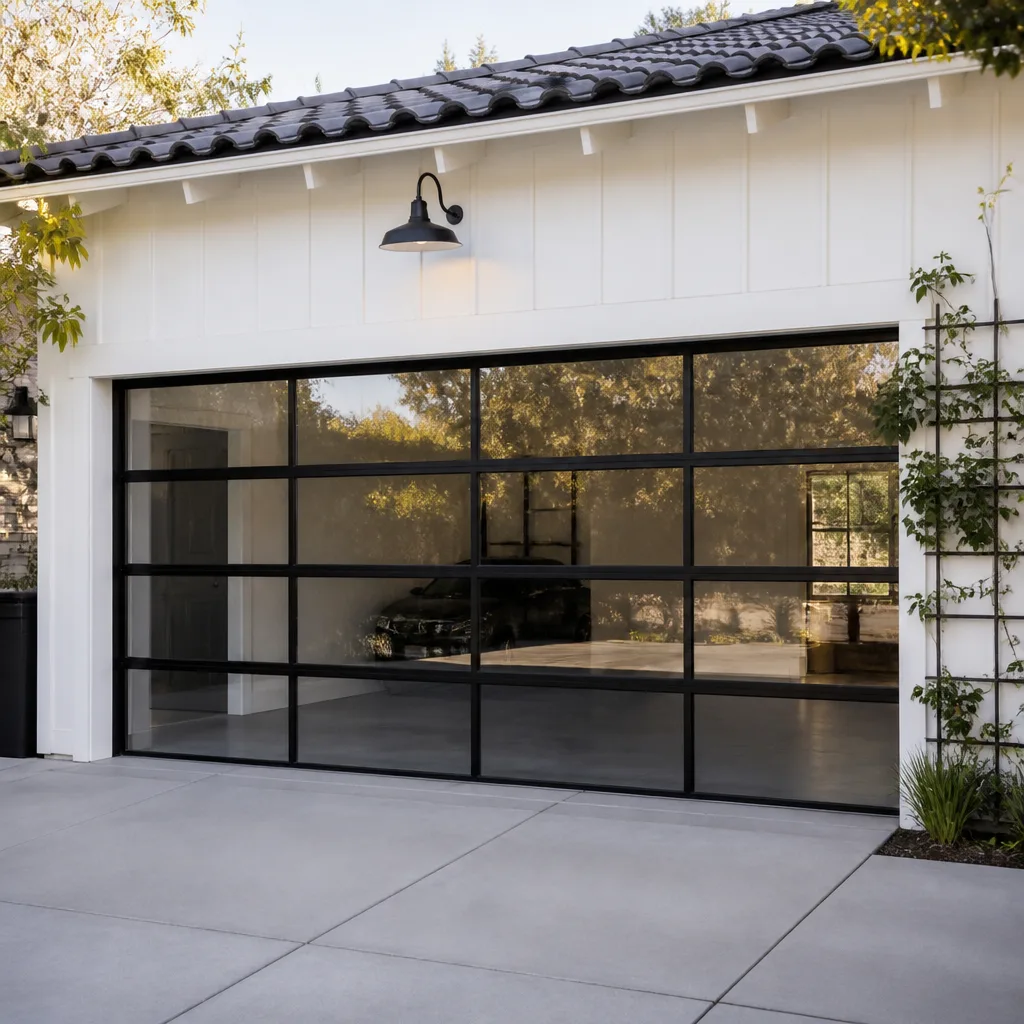
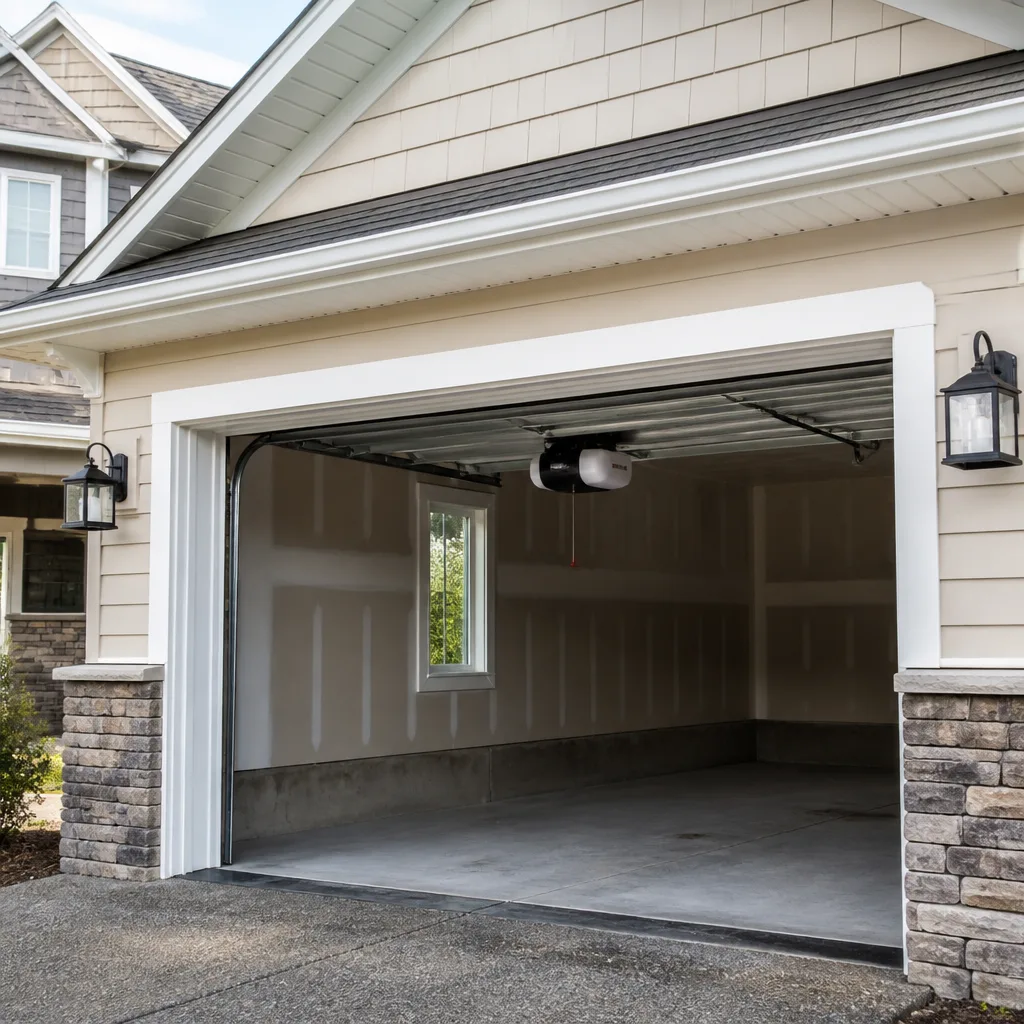
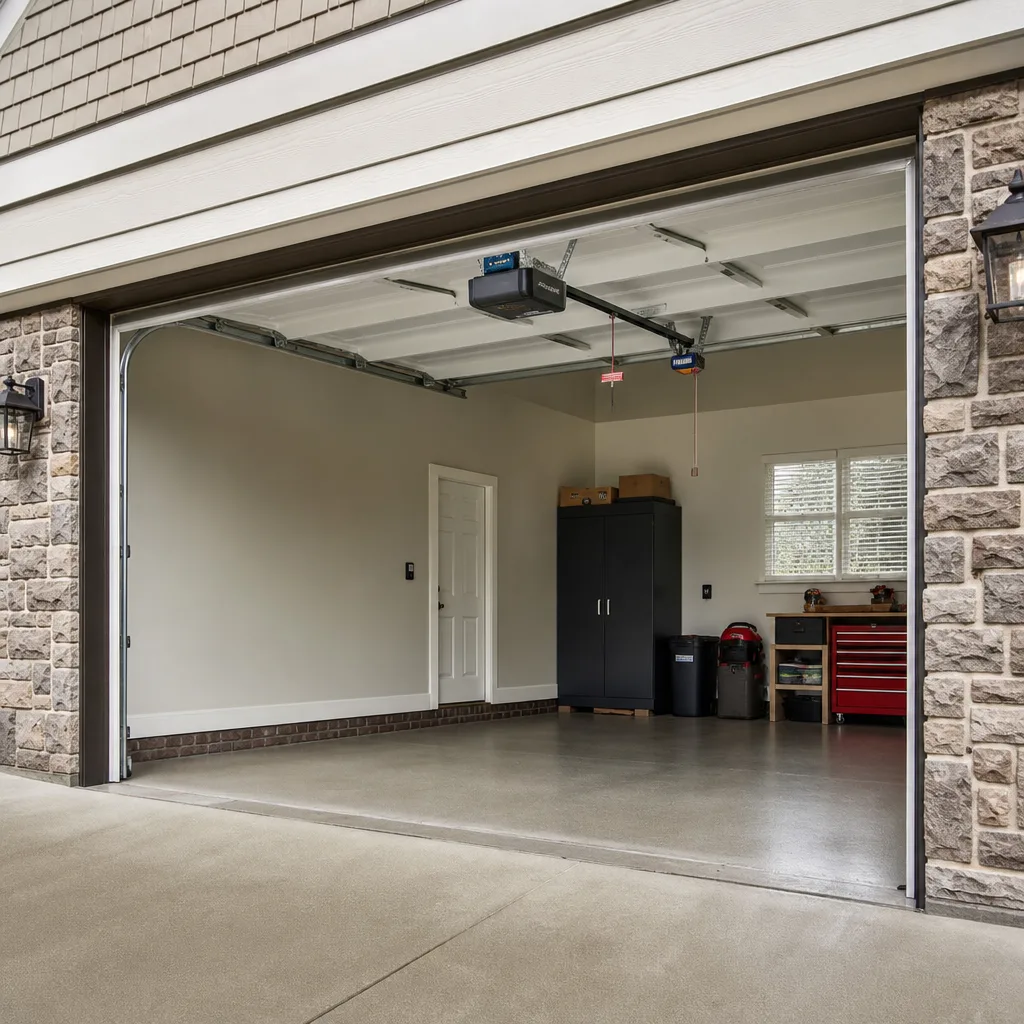
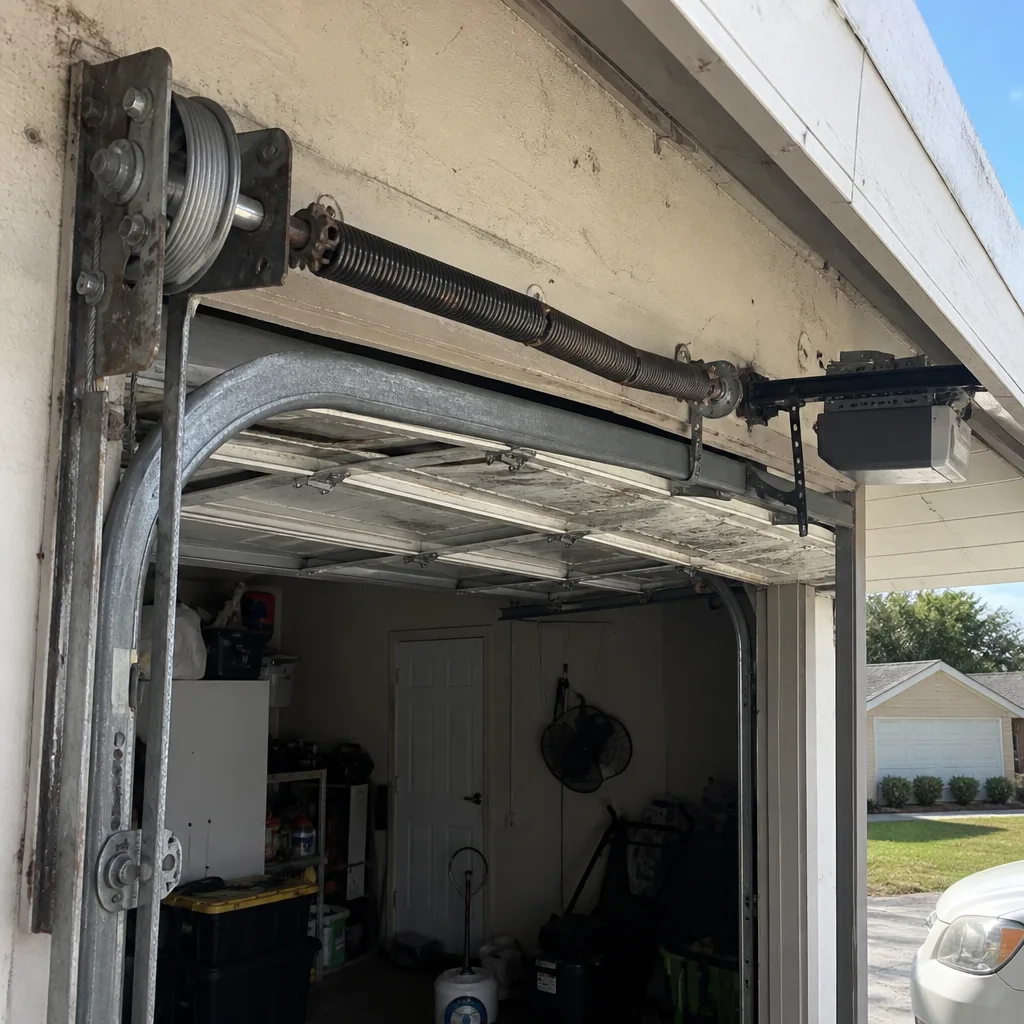 Before
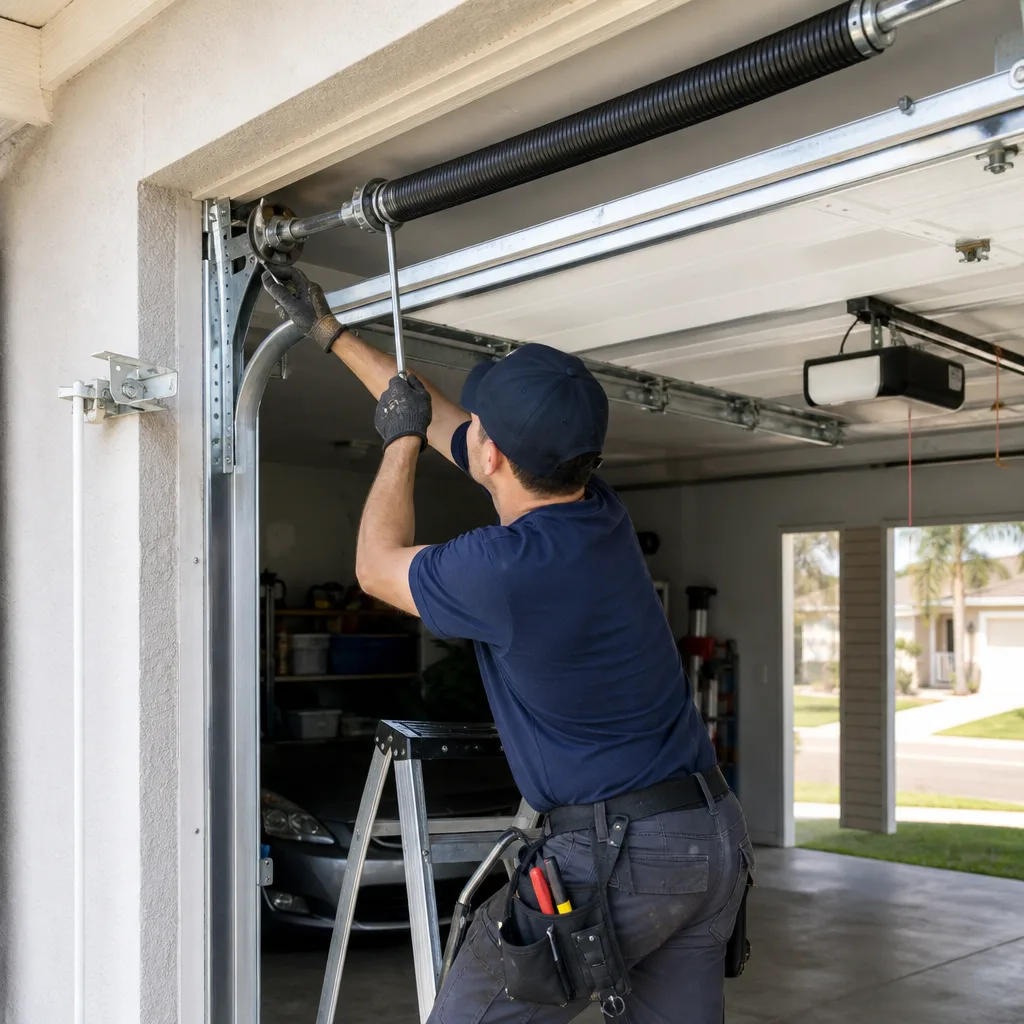 After
After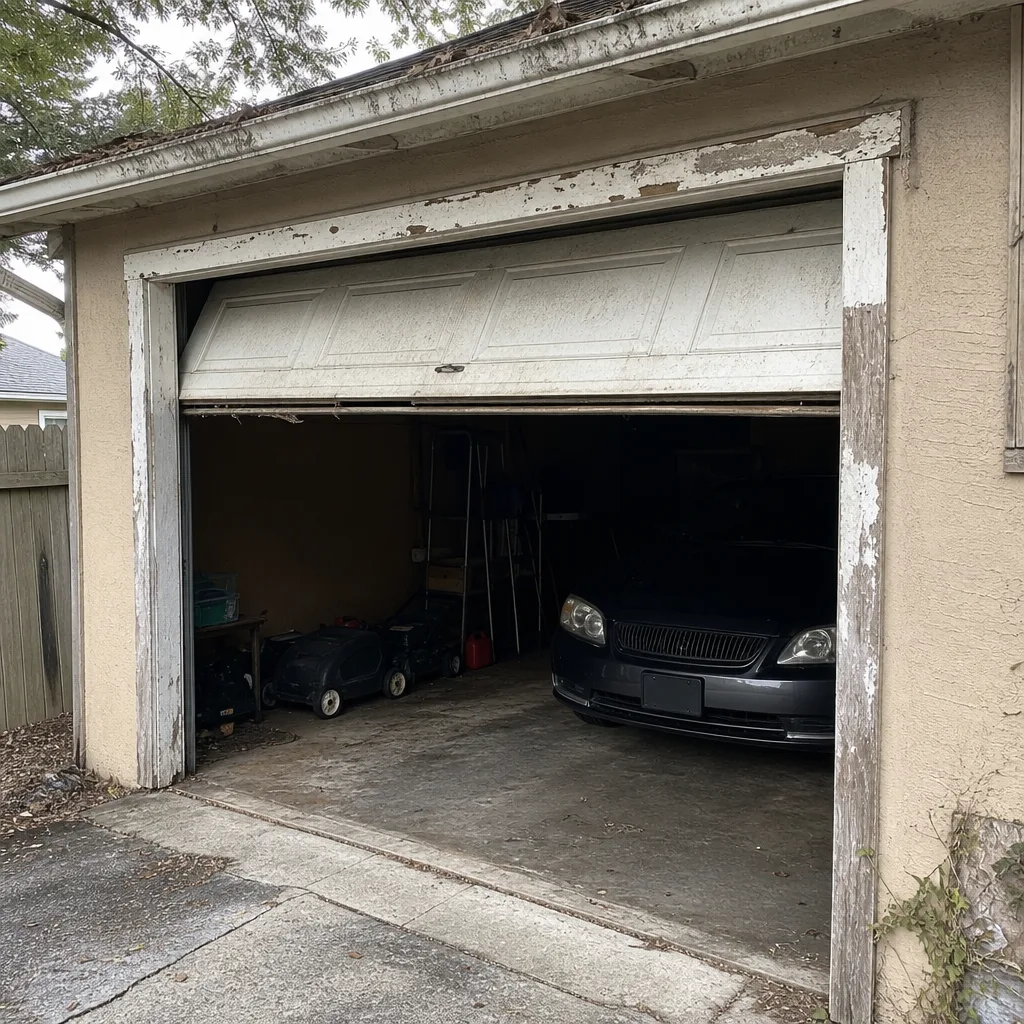 Before
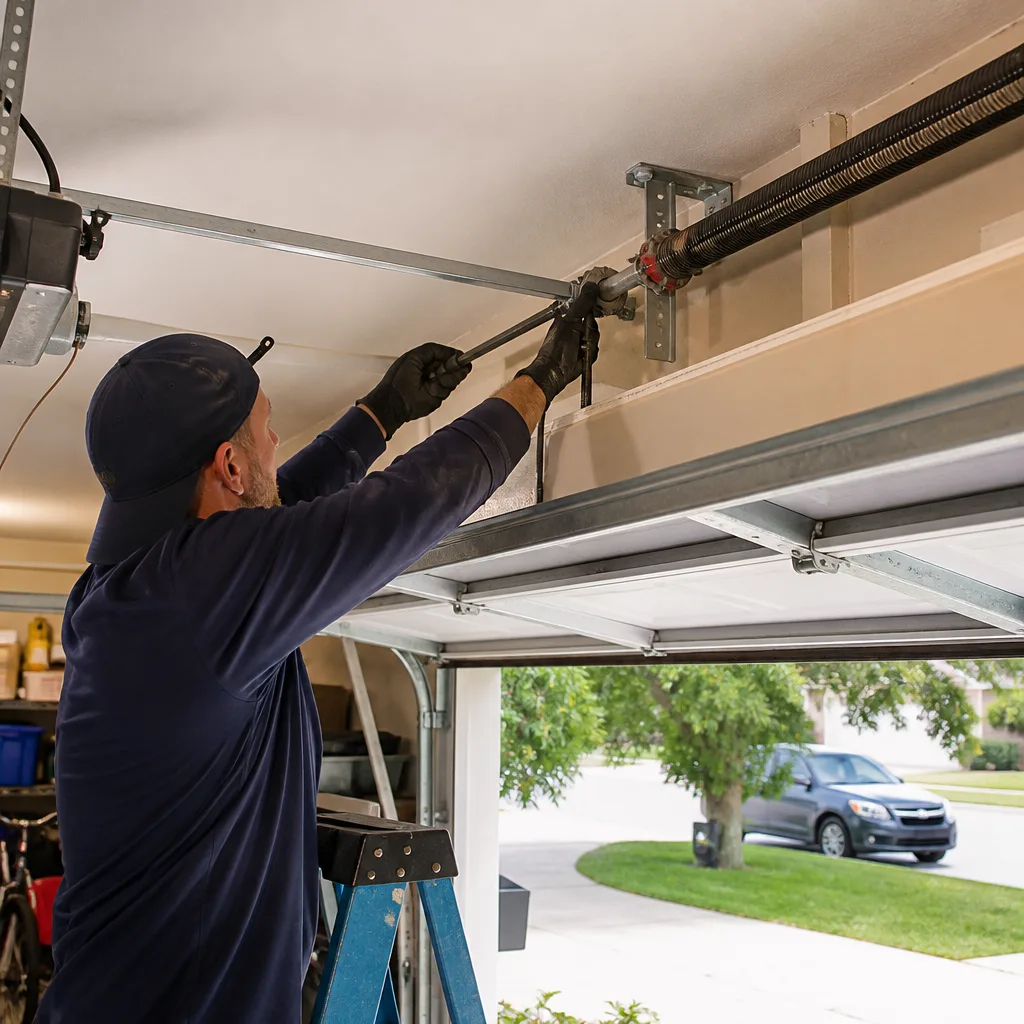 After
After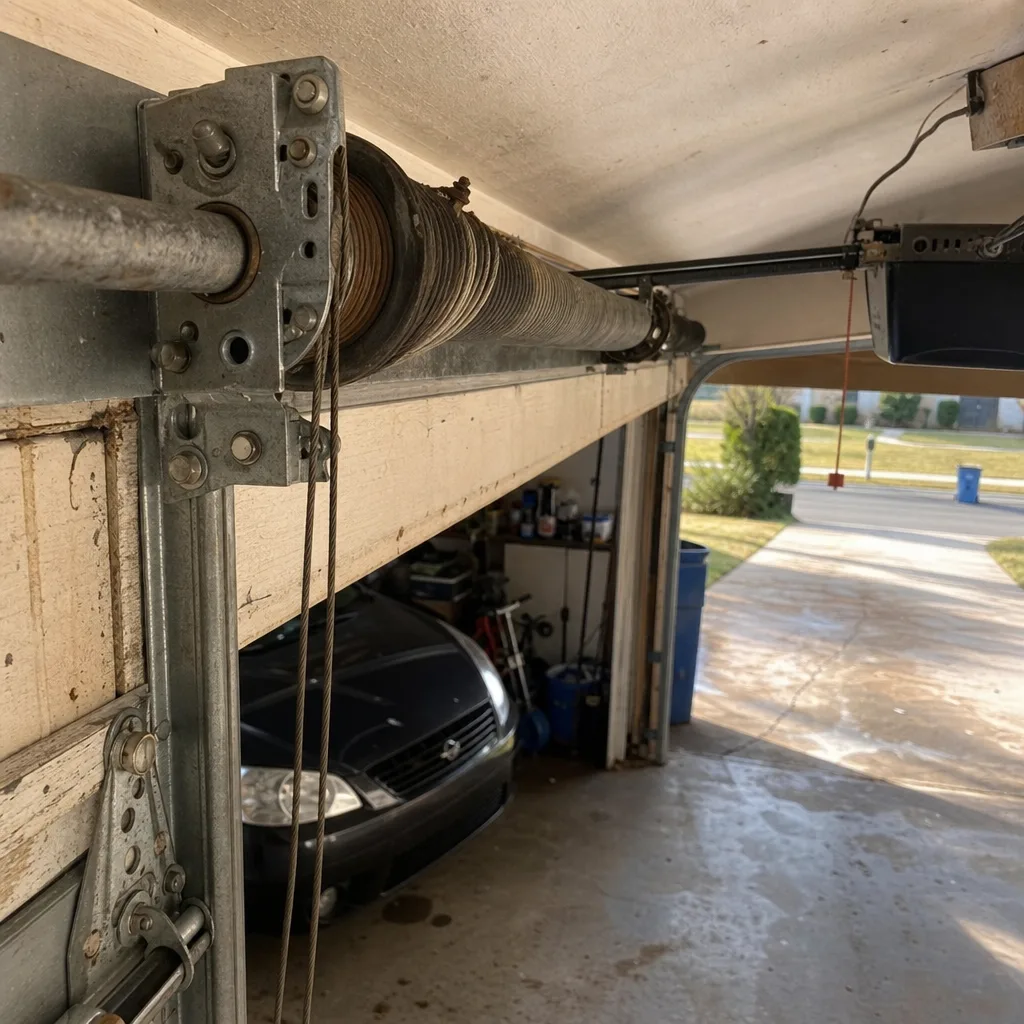 Before
 After
AfterGarage Door Warning Signs: A Lakeland Homeowner’s Reference Guide
A garage door that “sounds different” is not a useful service call description. A garage door that produces a sharp metallic crack during the first six inches of travel has a torsion spring under asymmetric load - and the technician who doesn’t ask which it is before quoting a spring replacement is guessing at your expense. In Lakeland, where humidity sits above 70 percent for most of the year and afternoon thunderstorms roll through like clockwork from June through September, garage door components fail in patterns that are predictable if you know what to listen for. This guide maps fifteen warning signs to the specific components that cause them, tells you which ones demand an immediate stop, and shows you how to document what you’re seeing before you ever pick up the phone. For a broader overview of systems and materials, see The Complete Guide to Garage Door in Lakeland.
Quick Answer
The most common garage door warning signs in Lakeland are a sharp crack during opening (broken torsion spring), grinding or squealing from the rollers (worn bearings or rust), a door that opens unevenly or hesitates mid-travel (cable or track misalignment), and visible fraying on the cables near the bottom drum (imminent cable failure). Any of the first three on that list, plus any visible cable damage, means stop using the door immediately and call a professional. Everything else can typically wait a few days while you gather information and get a written quote.
Table of Contents
- Symptom-to-Component Diagnostic Table
- Immediate Stop vs. Monitor-and-Schedule
- How Lakeland Humidity Accelerates Specific Failures
- What Each Sound Actually Means
- Behavioral Warning Signs: Slow, Uneven, or Reversing Doors
- Visual Warning Signs You Can Check in Five Minutes
- Operator Warning Signs vs. Door Mechanical Warning Signs
- How to Photograph a Warning Sign Correctly
BeforeAfterSymptom-to-Component Diagnostic Table
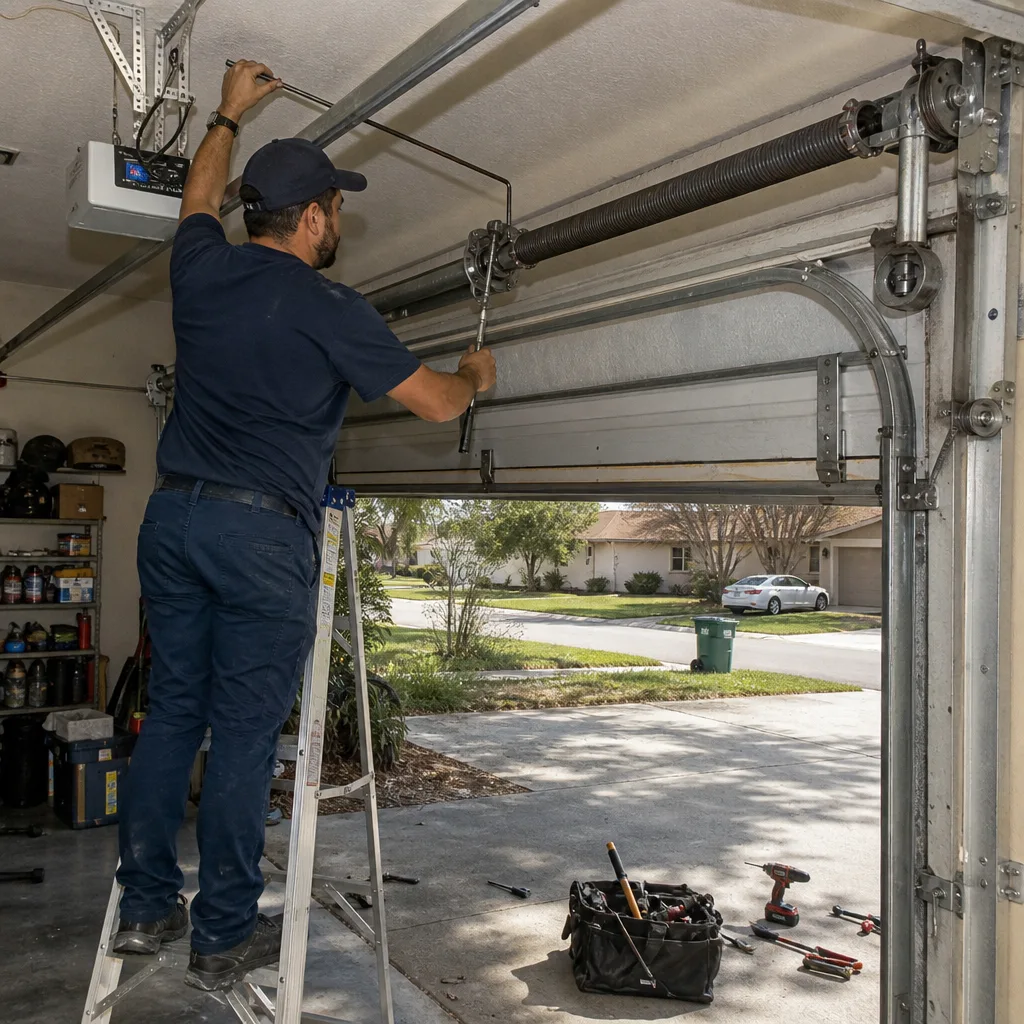
Every warning sign your garage door produces maps to a specific failing component. Here’s the table we use internally at Servo Garage Doors Lakeland when a homeowner calls in describing a sound or behavior. The left column is what you experience. The right column is what’s actually wrong. If you can name the component when you call, you control the conversation from the first sentence - and you get a more accurate quote faster.
- Sharp metallic crack during first six inches of travel - Torsion spring. The spring broke under tension. The door will not lift manually or with the opener until the spring is replaced. Stop using the door.
- Grinding or squealing that follows the door’s movement - Roller bearings. The ball bearings inside the roller have worn or the roller has rusted to the point of seizure. This gets louder over weeks, not days.
- Loud popping when the door moves - Section hinges or the torsion tube. Popping at the hinges means the hinge plates are loosening from the section. Popping near the center of the door means the torsion tube is shifting.
- Scraping sound from one side - Track misalignment or a bent track at floor level. The door edge is physically contacting the track. This is common in Lakeland garages where a car bumper has nudged the track.
- Rhythmic clicking while the door is in motion - A roller with a flat spot or debris stuck in the track. If the click matches the roller rotation speed, it’s the roller. If it’s irregular, check the track for a nail or screw that backed out.
- Door opens slowly or labors near the top - Spring fatigue. Torsion springs lose tension over 8-12 years of daily use. The opener motor is doing more work than it should.
- Door opens unevenly, one side higher than the other - Cable slip at the drum or a broken cable. If the door still opens but sits crooked, one cable has likely jumped the drum groove.
- Door reverses mid-travel without obstruction - Limit switch drift or force sensor sensitivity. This is an operator issue, not a door mechanical issue. See the operator section below.
- Visible rust staining on the bottom panel corners - Water wicking from the concrete slab. Common in Lakeland garages where the slab is below grade and afternoon storms sheet water against the door.
- Frayed cable strands visible near the bottom bracket - Cable fatigue. Cables have a 7-10 year life in humid climates. Once strands separate, failure is a matter of weeks.
Immediate Stop vs. Monitor-and-Schedule
Not every warning sign is an emergency. But three of them are, and misreading that distinction is how a $180 repair becomes a $1,400 door replacement. If you’re planning to hire help, read How to Hire a Garage Door Contractor in Lakeland: A Step-by-Step Guide first. The rule is simple: anything involving springs, cables, or the bottom bracket means stop using the door immediately. Anything involving rollers, hinges, or the opener can usually wait a few days while you collect information and get a written quote.
Stop Immediately
- Broken torsion spring - You’ll hear the crack. The door will not lift more than a few inches, and if it does, one side will be carrying all the weight. Every additional attempt to open the door puts asymmetric load on the cables and the operator. Springs in Lakeland typically fail after 10,000-15,000 cycles, which for a two-car household means roughly 8-10 years.
- Frayed cable at the drum or bottom bracket - If you can see individual wire strands separating from the cable, the cable is in its final stage. Cables carry the full weight of the door. When one fails, the door falls to one side, bends the bottom bracket, and often twists the panel. That’s a $400-$600 repair turning into a $1,200-$1,800 replacement.
- Bent bottom bracket - The bracket that anchors the cable to the bottom corner of the door is under constant tension. If it’s visibly bent or the mounting bolts are pulling through the panel, the cable can release at any moment. This is a stop-and-call situation.
Monitor and Schedule Within a Week
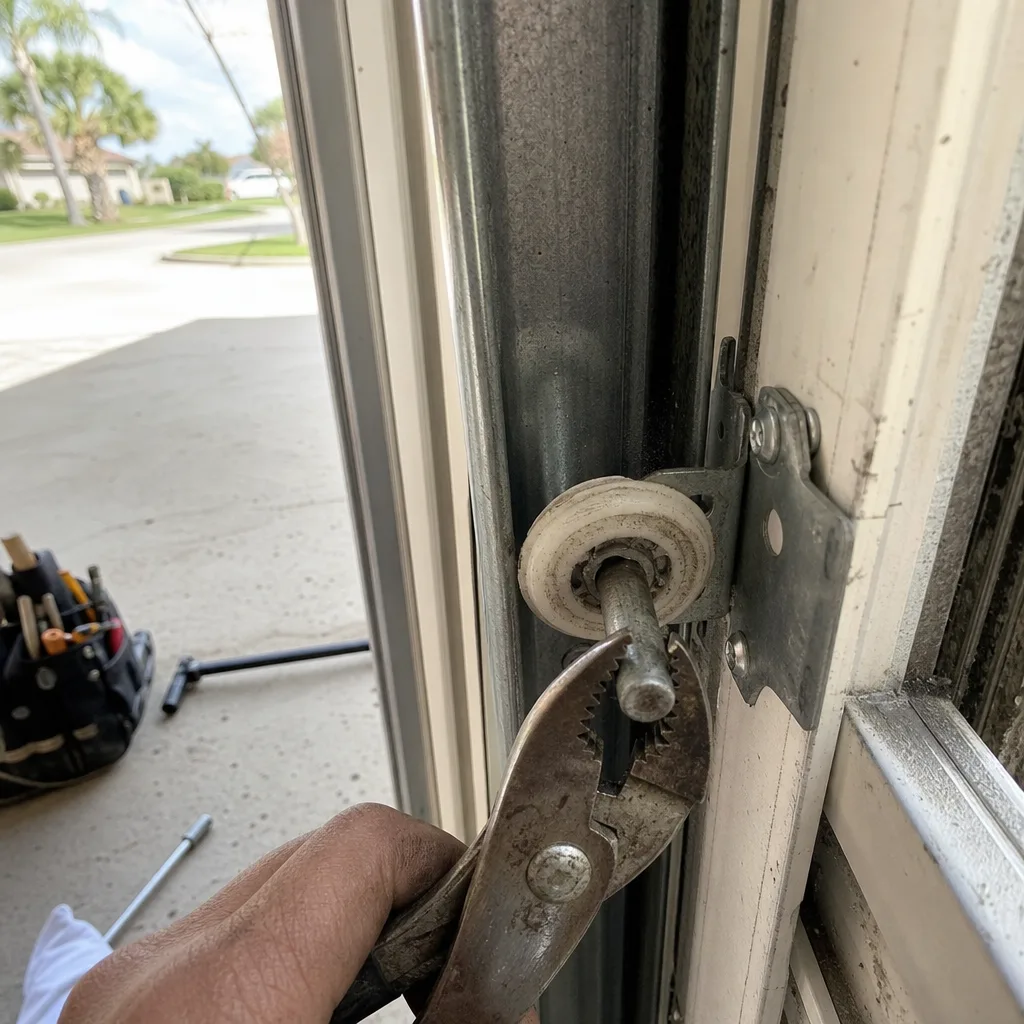
- Squealing or grinding rollers - Annoying, progressive, but not dangerous in the short term. The door still operates safely with noisy rollers for several weeks. Replace before the noise becomes a grinding sound, which indicates the roller has seized and is now dragging metal on metal through the track.
- Loose hinge or popping sound at a hinge point - A loose hinge will get looser, but it’s not carrying spring tension. Tighten it if you can reach it safely with the door closed, or have it addressed at your next scheduled service.
- Slow opening with no other symptoms - A door that takes noticeably longer to open than it did six months ago is usually spring fatigue. The springs are still functional, just weaker. You have weeks, not days.
- Cosmetic rust at panel edges - Rust doesn’t travel fast in a Lakeland garage, provided the door is painted and you keep the bottom edge clear of standing water. Schedule a repaint or panel replacement when convenient.
How Lakeland Humidity Accelerates Specific Failures
Garage door components fail differently in Lakeland than they do in Phoenix or Denver. The humidity here - averaging 74 percent relative humidity annually, with summer months staying above 80 percent - creates three failure patterns we see repeatedly across homes in Dixieland, Beacon Hill, and Cleveland Heights.
Cable fraying at the bottom drum. The bottom of the cable, where it wraps around the drum, sits closest to the concrete slab. Lakeland garages collect moisture at floor level, especially after an afternoon storm blows rain under the door seal. That moisture wicks into the cable strands and accelerates oxidation. Cables in Lakeland typically show visible fraying at the 6-8 year mark, compared to 10-12 years in dry climates. If you’re at year seven with original cables, inspect the bottom three inches of each cable monthly.
Roller bearing seizure. Most roller bearings are sealed, but the seals degrade under constant humidity. Once moisture gets inside, the ball bearings rust and begin to bind. The first sign is a grinding sound that follows the door’s travel. By the time you hear grinding, the bearing surfaces are already pitted. Rollers are a $12-$18 part each; the labor to replace all of them on a 16-foot door typically runs $140-$220 in Lakeland. That’s a maintenance item worth doing before the grinding starts.
Track rust at floor level. The vertical tracks sit three inches above the slab. In older Lakeland homes where the garage slab is slightly below grade, storm runoff collects along the bottom track edge. Rust develops where the track meets the floor, and over time the track face becomes rough enough to catch the roller edge, which causes the scraping sound mentioned in the diagnostic table. Light surface rust can be cleaned. Pitting that catches the roller means track replacement, which runs $180-$280 per track installed.
What Each Sound Actually Means
Sound is the earliest warning system a garage door has, and most sounds can be identified in the first five seconds if you know what to listen for. Here’s how we diagnose each one over the phone at Servo Garage Doors Lakeland, and what you should note when you call.
The Crack (Torsion Spring)
This is unambiguous. A torsion spring under load that breaks produces a sharp crack that sounds like a rifle shot from inside the garage. It happens during the first few inches of travel, because that’s when the spring is transitioning from full tension to partial tension. If you hear this sound, the spring is broken. The door has no counterbalance. Do not attempt to open it manually - you’ll be lifting 130-180 pounds of door weight with no mechanical assist - and do not run the opener, which will burn out the motor trying to lift a door it can no longer move. Spring replacement in Lakeland typically runs $240-$380 for a single spring, $320-$480 for a pair, including labor.
The Grind (Roller Bearings)
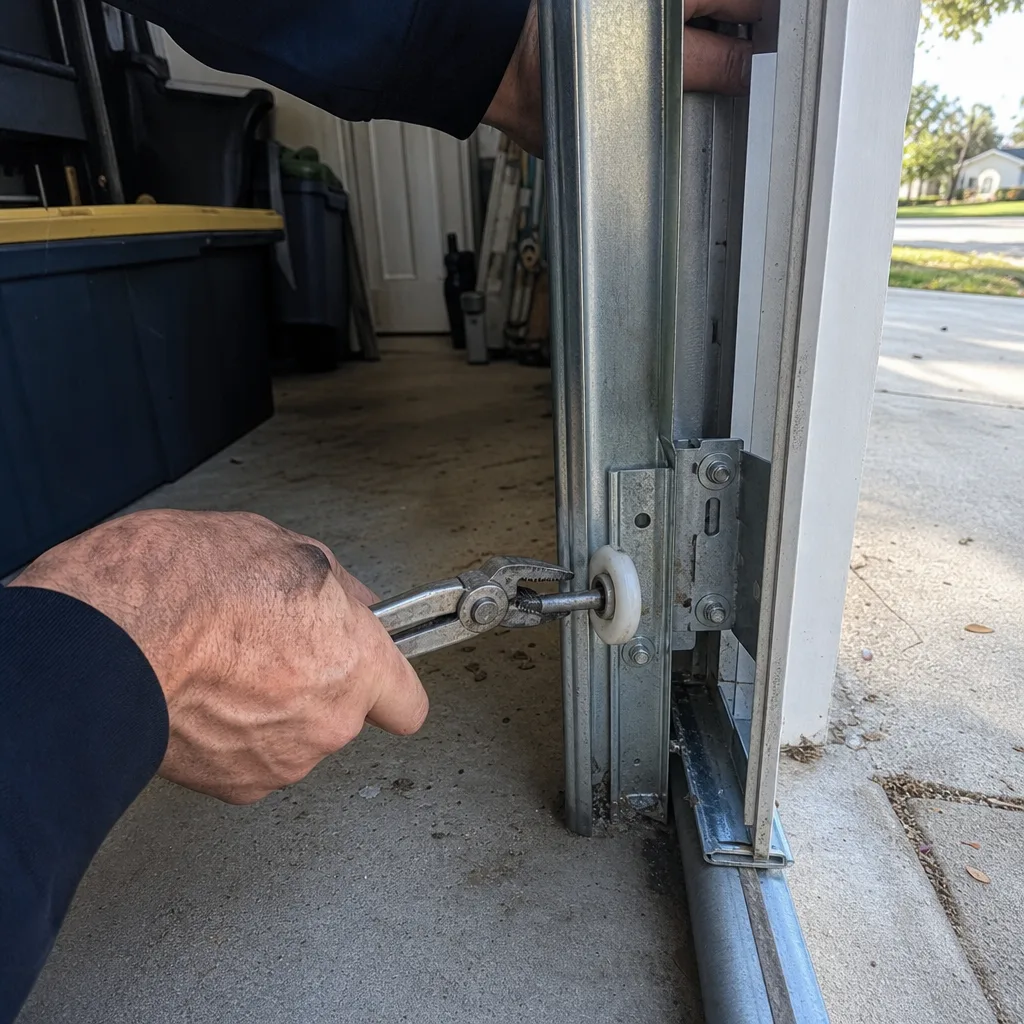
Grinding is a rotational sound. It follows the door’s movement, gets louder as the door passes specific points, and softens when the door stops. It’s the sound of ball bearings that have lost their lubrication, rusted, and begun to scrape against the roller track. A grinding roller is still functional - the door will open - but the bearing is failing, and continued use widens the wear. Replacing rollers before they seize is $140-$220 for a full set on a 16-foot door.
The Pop (Hinges or Torsion Tube)
A popping sound is a metal-on-metal slip. At the hinges, it means the hinge plate has worked loose from the door section and is shifting with each movement cycle. At the center of the door, it means the torsion tube is moving laterally inside its bearing plates. Both are repairable before they become structural problems. A popped hinge that gets ignored long enough tears the screw holes out of the panel, and that’s a section replacement at $350-$600 per section.
The Scrape (Track Contact)
Scraping is the sound of the door edge hitting the track. It’s rhythmic, matched to the door’s speed, and almost always comes from one side only. The cause is either a track that’s been bent inward at the bottom (often by a car bumper) or a roller that’s mushroomed and is dragging against the track face. Both are visible in a five-minute inspection. Track realignment in Lakeland runs $90-$150; track replacement is $180-$280 per side.
Note that Lakeland’s humidity also produces a fourth sound we hear often: a soft creak, like an old hinge, that happens when the door first moves after sitting for several hours. That’s the door simply breaking free of the humidity tack that forms on the track. It’s normal, harmless, and not a repair issue.
Behavioral Warning Signs: Slow, Uneven, or Reversing Doors
Some warning signs aren’t sounds at all. They’re behaviors - the way the door moves, or fails to move, during the open and close cycle. These behaviors are diagnostic in their own right.
Slow Opening or Closing
A door that moved from closed to fully open in 12 seconds and now takes 18 is telling you the springs are fatigued. Torsion springs are rated for a number of cycles - typically 10,000 for standard springs - and as they approach the end of their cycle life they lose tension. The opener motor compensates by working harder, which shortens the opener’s life. If your door has slowed noticeably over six months, have the spring tension measured before the spring fails entirely. A spring tension adjustment in Lakeland is typically $80-$120, far less than an emergency replacement.
Uneven Movement
A door that rises with one side noticeably higher than the other has a cable problem. Either a cable has slipped out of the drum groove, or one cable has stretched slightly more than the other. The latter happens gradually over years; the former happens suddenly, often with a jolt. An uneven door is your warning that the cable system is no longer holding both sides at equal tension. Continued use will derail the cable completely, and the door will drop on one corner. This bends the bottom bracket and typically damages the panel. The repair bill at that point is three times what a cable adjustment would have cost.
Reversal Mid-Travel
A door that reverses direction halfway through closing, with nothing visible blocking the track, is almost never a door problem. It’s an opener problem. The opener’s force sensor thinks it hit an obstruction and reverses to prevent damage. The causes are usually a limit switch that’s drifted out of adjustment, a force setting that’s too sensitive, or a track obstruction too small to see but dense enough to trigger the sensor. This is a garage door opener repair issue, not a door mechanical issue - and in Lakeland, the humidity factor means cobwebs, gecko droppings, and dirt accumulate on the sensor lenses faster than in drier climates. Clean the sensor lenses with a dry cloth before calling anyone; that fixes a surprising number of reversal complaints.
Door Opens but Won’t Stay Open
If the door reaches the top of its travel and then dips a few inches before settling, the springs are failing to hold tension at full extension. This is a spring issue, not an opener issue. The opener is doing all the holding. Left unaddressed, the springs will fail completely. This behavior is a two-week warning, not a two-month warning.
Visual Warning Signs You Can Check in Five Minutes
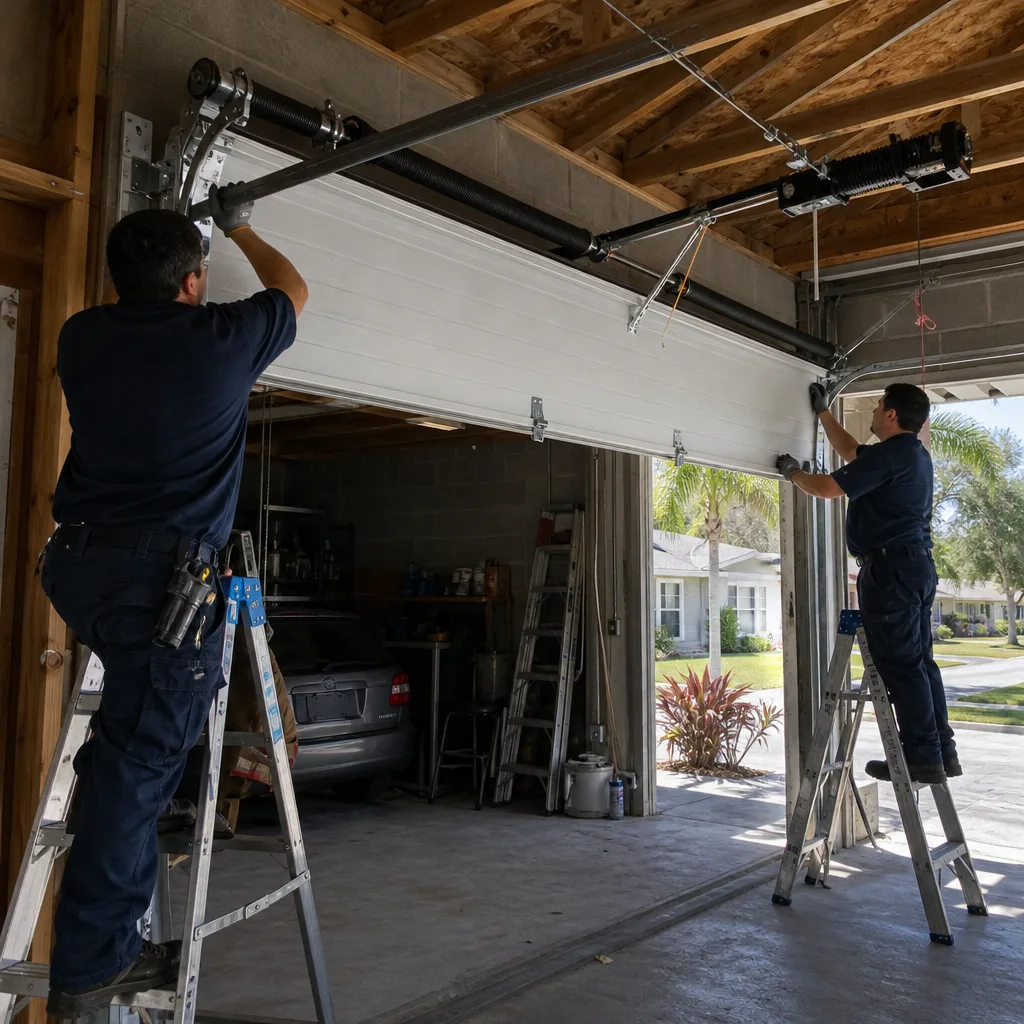
You don’t need to remove anything or reach into any mechanism to spot most warning signs. Here’s a five-minute visual inspection you can do with the door closed, standing inside the garage. Each item takes about 30 seconds.
- Look at the cables. The cables run from the bottom corners of the door up to the drums on the torsion tube. Look specifically at the bottom three inches of cable, where it attaches to the bottom bracket. Frayed wire strands, rust discoloration, or a cable that looks “fuzzy” compared to its neighbor means the cable is in the early stages of failure. Call for a replacement quote.
- Look at the bottom brackets. The brackets at the two bottom corners of the door are where the cables anchor. Check for any bend in the bracket metal, any gap between the bracket and the door panel, or any screw hole that looks pulled or elongated. Any of these means the bracket is under abnormal stress.
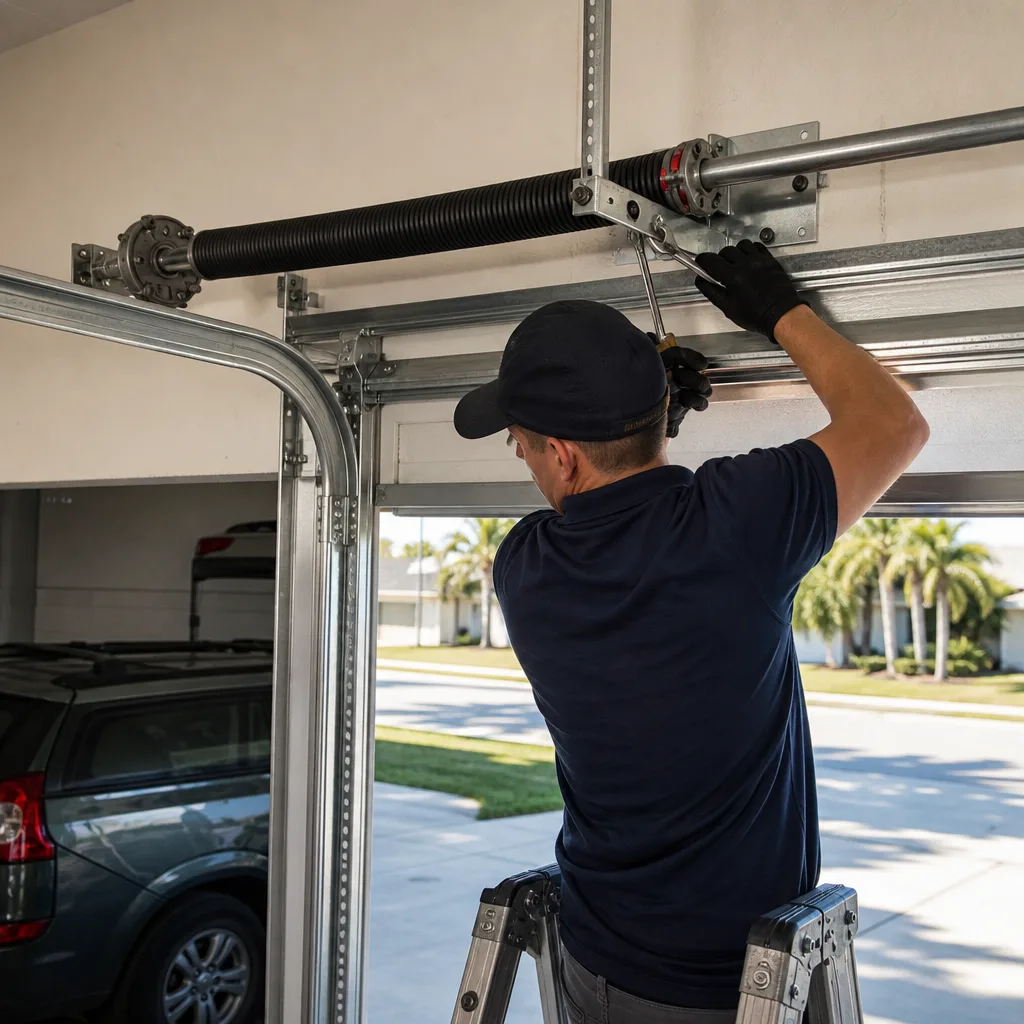
- Look at the spring. For a torsion spring - the thick spring mounted horizontally above the closed door - look for any visible gap in the coil. A broken torsion spring has a clean separation you can see from across the garage. For extension springs - the thinner springs that run along the horizontal tracks on each side - look for a gap between coils or a safety cable that’s gone slack.
- Look at the rollers. Follow one roller up its track as far as you can see. If the roller wheel has visible flat spots, wobbles as it turns, or has come partially out of the track, it needs replacement. If the roller looks intact but the track has a visible bend or a rust bloom, that’s the track issue from the diagnostic table.
- Look at the floor level. Check where the door meets the concrete when closed. Standing water, visible rust staining on the panel bottom, or a door seal that’s pulling away from the panel means moisture is getting into places it shouldn’t. In Lakeland garages, this is the single most common contributor to premature cable and track failure.
Operator Warning Signs vs. Door Mechanical Warning Signs
This is the distinction that saves Lakeland homeowners the most money: the garage door opener and the garage door itself are two separate systems, they fail for different reasons, and they require different diagnostic approaches. A homeowner who calls a company and says “my door is broken” without knowing which system is failing is inviting a technician to quote both.
Operator Warning Signs
The opener is the box mounted to the ceiling that drives the trolley carriage along the rail. Its warning signs are electrical and sensory:
- Light codes. Modern openers - especially LiftMaster and Chamberlain models - flash a diagnostic code through the overhead light when something’s wrong. Four flashes means the safety sensor is misaligned. Five flashes means the motor overheated. The specific pattern is printed on the opener housing. Take a photo of the flashing pattern before you call.
- Force reversal. The opener reverses because its force sensor tripped, not because the door hit something. This is an adjustment issue, typically $60-$110 for a service call in Lakeland.
- Limit behavior. The door stops short of fully open or fully closed because the limit switch controls the travel distance and it’s drifted. Adjustment is quick, but if it keeps drifting the limit switch itself is wearing out.
- Slow opener response. The door moves fine manually but responds sluggishly to the remote or wall button. That’s the opener’s logic board, not the door. The board is a $180-$260 part plus labor on most major brands - Genie and Chamberlain boards are typically on the higher end.
Door Mechanical Warning Signs
The door itself is the panel, the springs, the cables, the tracks, the rollers, and the hinges. Its warning signs are structural and physical:
- Bent panels, cracked panels, or sections pulling apart. Panel damage is almost always the result of an unresolved mechanical issue - usually a cable or spring that failed and dropped the door unevenly.
- Spring fatigue or failure. Covered in detail above. Springs are the single most-replaced component on a garage door, and in Lakeland the replacement window is every 8-10 years for a two-car household.
- Cable fraying, slipping, or breaking. Covered above. Cables in humid climates fail from the bottom up.
- Roller wear, hinge loosening, and track bending. All mechanical, all diagnosable by sight or sound.
The practical takeaway: if the door moves stiffly or makes mechanical sounds, you need a door technician. If the door moves smoothly but the opener misbehaves, you need an opener technician. Servo Garage Doors Lakeland handles both, so you don’t need to guess which one to schedule. The diagnostic process is the same either way: we identify the failing part, photograph it, and hand you a flat written price before any work begins.
How to Photograph a Warning Sign Correctly
A photograph taken from the right angle with the right context can often let a technician make a preliminary assessment before they arrive - which means the first visit is the repair visit, not a diagnostic visit. Here’s how to photograph garage door warning signs so the photo actually communicates something.
- Take the photo at the component’s level, not from standing height. Crouch down. A cable photo taken from six feet away shows nothing. A cable photo taken from 18 inches away, with the camera parallel to the cable, shows individual wire strands and rust color.
- Include a reference object. Hold a quarter or your thumb next to the frayed cable section, the bent bracket, or the rust bloom. A technician can’t judge the severity of cable fraying from a photo without a size reference. A quarter is the standard reference because it’s uniform and everyone has one.
- Use the flash, even in daylight. Garage interiors are shadow-heavy, especially in the corners where cable drums and bottom brackets live. The flash eliminates the shadow that hides cable damage.
- Photograph both sides, even if only one side looks bad. Cables and rollers wear together. A photo of both cables lets a technician see whether one side is simply ahead of the other in the same failure pattern.
- For sound issues, take a video instead. Ten seconds of the door opening and closing, with the phone held still in the center of the garage, lets a technician hear exactly what you’re hearing. Mark the time in the video when the sound is loudest. A video of a grinding roller or a popping hinge is often enough to confirm the diagnosis before the technician arrives.
- Photograph the opener’s light code. If the opener is flashing a code, take a photo of the opener unit with the light visible and the model number readable. The model number is printed on the side of the opener housing and tells the technician which diagnostic chart to consult.
At Servo Garage Doors Lakeland, we encourage customers to send these photos before we arrive. Clause 4 of The Haven Standard - the rule that says the technician must photograph the failed component before quoting a replacement - works the same way for homeowners. A clear photo from you means our technician often diagnoses the issue before pulling into the driveway, which means the written price is in your hand on the first visit.
Common Mistakes to Avoid
- Continuing to use the door after a spring breaks. Every additional cycle you force on a door with a broken spring puts asymmetric load on the cables, the track, and the opener motor. The spring replacement is the cheap repair. The cable failure, bent panel, and burned-out motor that follow are not.
- Lubricating a grinding roller instead of replacing it. Grinding means the bearing surface is already damaged. Adding lubricant masks the sound for a few weeks and allows the wear to continue. By the time the grinding returns, the roller may have seized entirely, and a seized roller can derail from the track.
- Ignoring a door that opens unevenly and “fixing” it by adjusting the opener. An uneven door is a cable or spring issue. Adjusting the opener’s limit or force settings to compensate hides the symptom while the underlying mechanical problem gets worse. The door will eventually drop on one side.
- Spraying WD-40 on anything. WD-40 is a solvent, not a lubricant for garage door components. It strips what little grease remains on the hinges and rollers, and it accelerates the rust problem in humid climates. Garage door components need a lithium-based grease for the torsion springs and a silicone-based lubricant for the rollers and tracks. Nothing else.
- Waiting for the warning sign to become a failure. Every component on a garage door gives warning before it fails. The broken spring makes a crack. The frayed cable shows visible wire strands. The failing roller grinds for weeks. The door that opens unevenly looks uneven for days or weeks before the cable lets go. Fixing a component at the warning sign stage costs a fraction of the emergency repair.
- Calling a contractor who won’t give a price over the phone or in writing before arriving. “We’ll see when we get there” is a red flag that means the quote comes after the work is already underway. The Haven Standard exists specifically to prevent this: Clause 1 states that a flat, written price and written scope are delivered before any work starts. No exceptions. If a company won’t put the price on paper before touching the door, find one that will.
- Assuming the opener is the problem when the door is the problem. Homeowners often replace a perfectly good opener when the real issue is spring fatigue. The opener labors because the springs are weak, not because the opener is failing. Replacing the opener without addressing the springs means the new opener will labor from day one.
When to Call a Professional
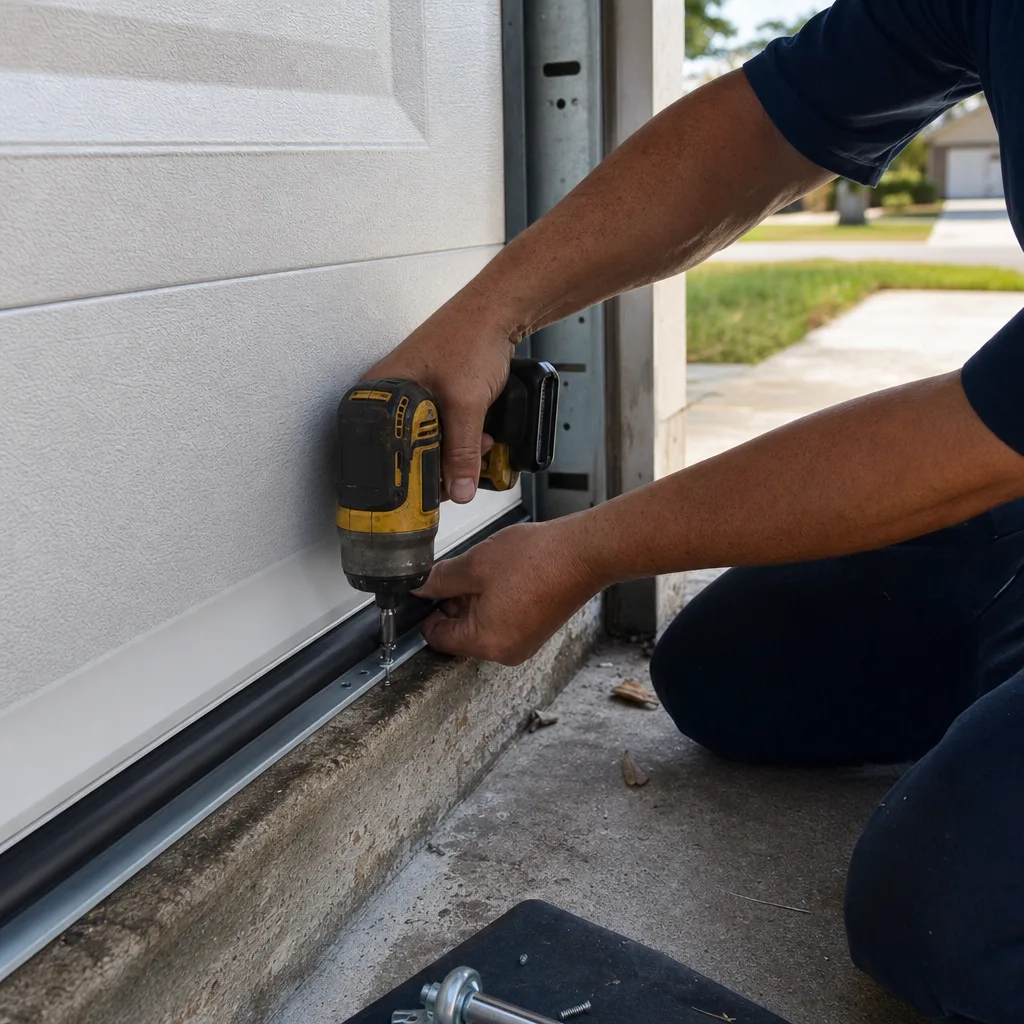
Call immediately if you hear the crack of a torsion spring, see frayed cable strands, or notice the door moving unevenly. These are not monitor-and-wait situations; they’re stop-and-call situations. Call within the week for grinding rollers, popping hinges, slow operation, or opener light codes that don’t resolve after cleaning the sensors. And if you’ve got a written estimate from another company and want a second opinion, bring the paperwork - Servo Garage Doors Lakeland offers a free second opinion on any competing written estimate, no coupon required. Call (863) 656-0858 for a free estimate in Lakeland.
Frequently Asked Questions
Spring replacement in Lakeland typically runs $240-$380 for a single torsion spring and $320-$480 for a pair, including labor. The exact price depends on the spring’s wire diameter, the door weight, and the cycle rating. Servo Garage Doors Lakeland quotes this as a flat, written price before any work begins, so you’ll know the exact number before the technician starts. Call (863) 656-0858 for a firm quote.
Yes. Servo Garage Doors Lakeland answers the phone 24/7 with a live person, and most spring and cable repairs are completed the same day the call comes in - even on weekends and holidays. We carry the most common spring sizes and cable lengths on the truck, which means the repair happens on the first visit rather than after a parts order.
A slow-opening door is usually spring fatigue, not an immediate safety hazard. But it’s a warning sign with a deadline. The opener is compensating for weakening springs, and when the springs fail completely - which they will, eventually - the failure is sudden and the door becomes dangerous. Address slow operation within a week or two of noticing it.
We service all eight major brands: LiftMaster, Chamberlain, Genie, Clopay, Amarr, Wayne Dalton, Craftsman, and Raynor. Parts availability for each varies by model, but the diagnostic approach is the same: identify the failed component, photograph it, and quote a flat written price before the work starts.
In Lakeland’s humidity, standard torsion springs last 8-10 years or roughly 10,000 cycles for a two-car household. Coastal-adjacent humidity - which Polk County shares with the rest of central Florida - shortens spring life compared to dry climates. If your springs are approaching the 8-year mark, have them inspected at the next service call.
No. The price you’re quoted before work begins is the price you pay. Clause 1 of The Haven Standard requires a flat, written price and a written scope of work delivered before any work starts. If an unexpected issue is discovered mid-repair, the technician stops, photographs the new finding, and issues a new written price before proceeding. You approve everything in writing before a dollar is added.
The Bottom Line
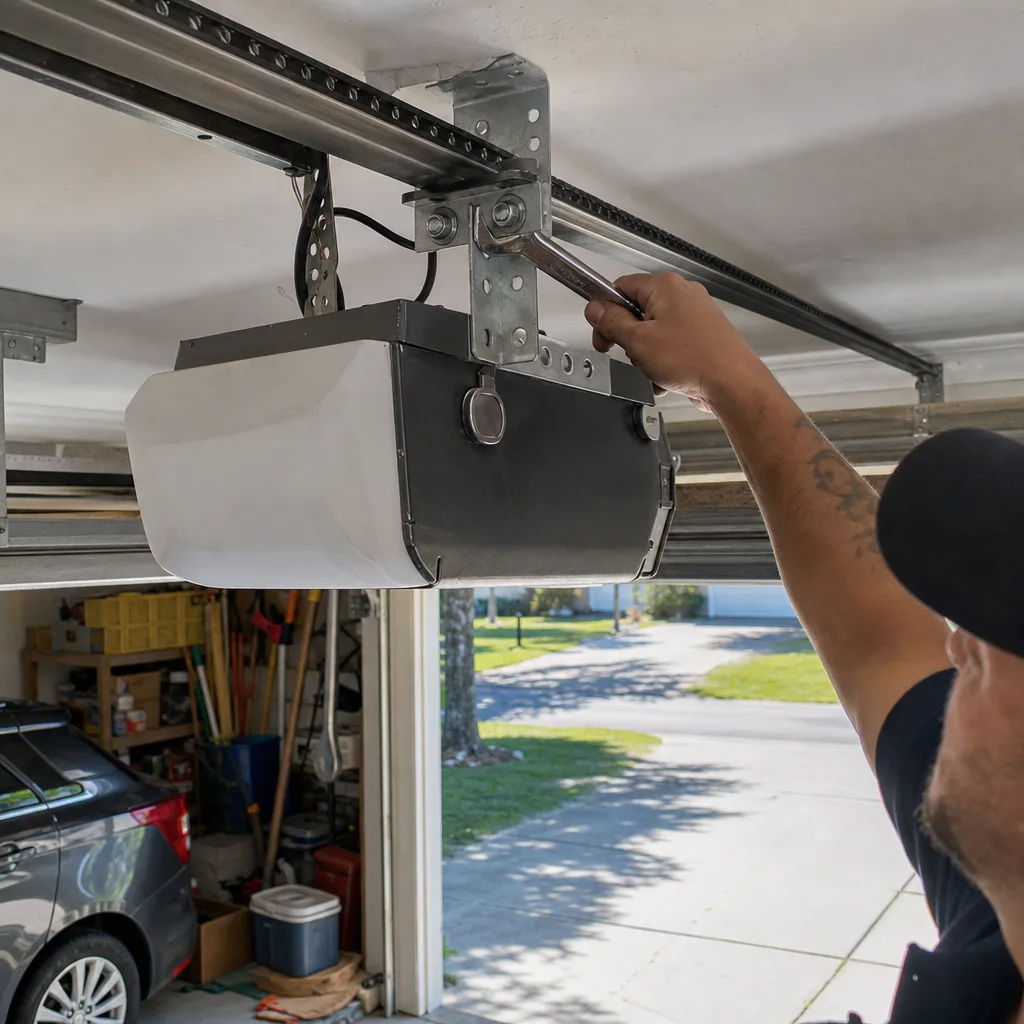
Garage doors don’t fail silently. They crack, grind, pop, scrape, slow down, and sit unevenly. Each warning sign maps to a specific component, and a homeowner who can name that component when they call a contractor controls the conversation - and the quote - from the first sentence. In Lakeland, where humidity accelerates cable and roller failure and afternoon storms create floor-level moisture, regular visual inspection of the cables, brackets, and floor edges is the cheapest maintenance strategy there is. Listen for the crack, watch for the uneven door, and when you call, bring a photo and expect a written price. For more guides & resources, visit our blog. Written by Marcus Deller, Owner at Servo Garage Doors Lakeland, serving Lakeland since 2015.